Start
Starting place
Pick the theme
I decide whether I want an upbeat song or a slow one, and what genre I want it to live in.
Original releases from Rendered Sound. Tap any cover to start the player — it follows you around the site.
Loading…
My algorithm for
the base has to be human & homegrown
Starting place
I decide whether I want an upbeat song or a slow one, and what genre I want it to live in.
Stem:Ample
I take that theme into Stem:Ample and select the cards I find interesting, doing a little experimentation until a very unique musical prompt develops.
Suno · Treblo
The prompt goes into my AI music generator — I use Suno or Treblo — and an instrumental is generated. I like to hum a tune and add that as audio to give the chorus or hook structure a little more shape — and sometimes I just sit on the instrumental for a while until I'm ready to move on.
Re:Writ
In Re:Writ I use Sketchpad or the Mood Pad to come up with an idea. Sketchpad can help me complete my lines without any AI assistance, but I almost always have the chorus, the bridge, and any pre-chorus or hook already laid out as the foundation.
Why the baseline comes first
For meaningful human authorship, I have to start with my own lyrical content. Then I can use AI to build on it or improve it — but the base has to be human and homegrown.
Suno
I copy and paste the baseline lyrics into Suno or Treblo — whatever I'm using — with just the instrumental, to see what comes out. If I'm using Suno, I actually want the weirdness high for this setting, because it gives me a lot of variation in the song.
Assist
I may bring in an AI generator to help improve the lyrical content — adding verses, sharpening a hook or a chorus. I like to keep it seventy percent human, thirty percent AI as much as possible, and I try not to go below that percentage. A lot of times, though, just listening to the song tells me exactly what's missing. Once the lyrics and the music are together, I start to hear it.
Suno
Now I start changing and adjusting prompts across iterations, honing in on what I really want. It could be as big as a full genre change — ambient electronic to a hybrid or experimental trap-ambient mix — or as small as adding a persona just to hear the song in a different vocal style.
The consistency mix
To keep the things I like consistent between iterations, I use a 35/45/65 percentage mix in Suno. The 35% is weirdness, which keeps the variation down. The 45% is for style weight, and the 65% is audio influence — I keep the overall audio influence as consistent as possible, and my small changes between iterations come from correcting the style prompt.
Suno Editor
After a few iterations I go into Suno Editor and re-chop the music, so the instrumentation shows up where I think the song needs it. If you're using Suno, don't skip this step — it lets me reorganize the instrumentation, move my bridge up, or rearrange my song easily. I don't worry about what the lyrics sound like after I've moved things around; once I hit the reiterate button and reapply my lyrics, the song goes back to where I need it to be.
Iterate
A few more iterations, adjusting any lyrics that still seem to need it.
Line-by-line human authorship
One of the things I love about Re:Writ is that it keeps track of my line-by-line human authorship while I'm using AI tools. So by the time I finish a song with AI-assisted lyrics, I know exactly what percentage of those lyrics are still mine and what percentage would be considered AI. That matters when I'm copyrighting my music or streaming it on professional platforms — the new guidelines say a song needs to be substantially human-made, which means keeping track of how much AI is contributing to my song creation process.
Suno Studio
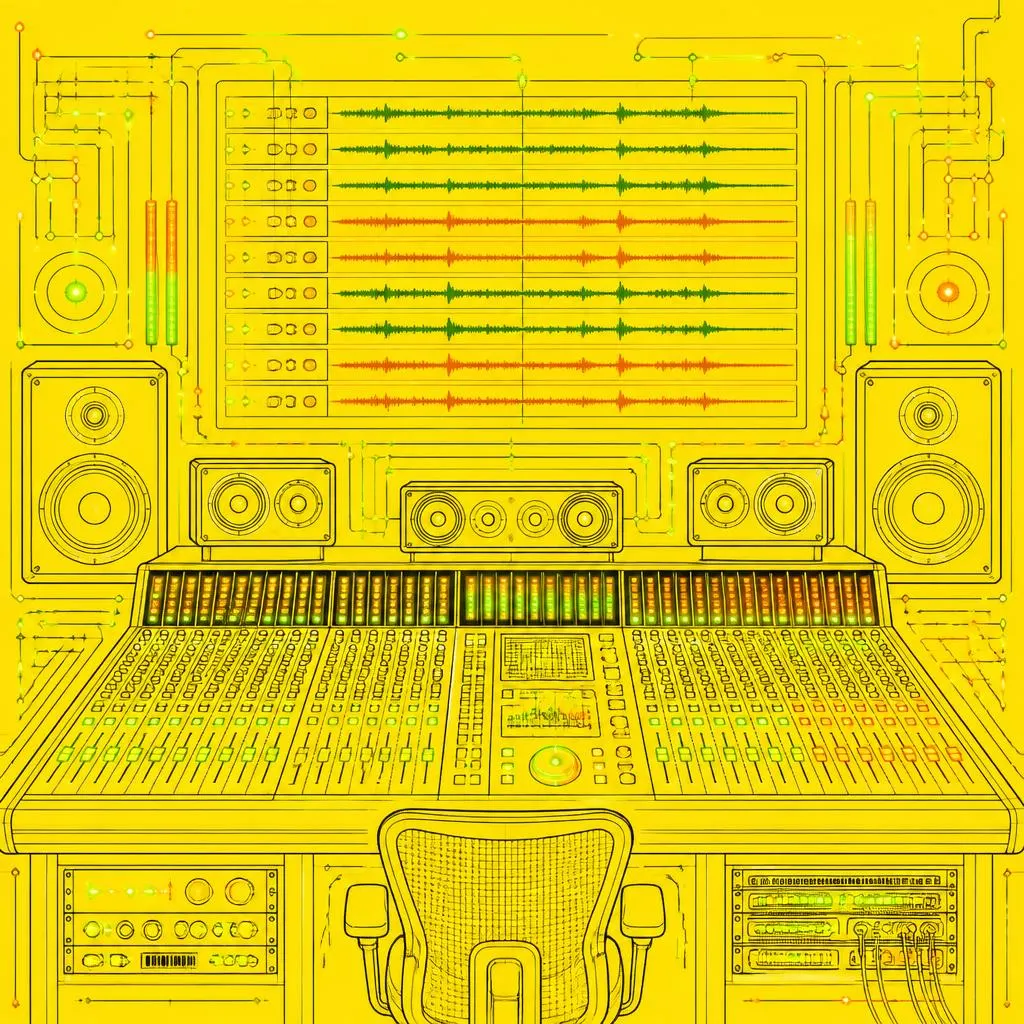
The song goes into Suno Studio, where I remove what I don't want and mix and match across iterations — I liked the way she sang the bridge in one take and the chorus in another, so I take both. I can also add whatever the song is missing: bongos, more synth work, double-time percussion.
A deliberate trick
I don't worry about the end result being perfectly smooth. Sometimes I finish with bad breaks in it on purpose — then reiterate the song so Suno itself smooths out the bad editing.
Compose:EP
Sometimes — only when I've done several iterations and the song still isn't exactly where I want it — I take my finalized lyrics and finalized music prompt and place them in Compose:EP's song critique, just to get an idea of where the song could go and what little changes I might still make.
One ecosystem · from the first prompt to the final release
Veridem Holdings builds AI authorship infrastructure for the creative economy. We document human creative control so your work stays yours — from the first prompt to the final copyright. Music is the proof of concept. Every tool in this suite is a Veridem product.
getveridem.com
The Meaningful Human Authorship Index scores authorship across 9 dimensions and generates a copyright-ready affidavit.
mhaix.com
Design your production style with 15 creative prompt cards. Save your session blueprint. Export your creative decisions as documented evidence of human intent.
stemample.com
Write your lyrics with line-by-line authorship tracking. Every human word tagged. Every AI suggestion documented.
rewrit.io
Turn finished songs into sequenced EPs with rationale, cover art direction, and the full 8-phase release checklist.
composeep.com
The publication where the ecosystem proves itself publicly. Essays, artist spotlights, and the culture of AI-assisted music.
You are here · renderedsound.com